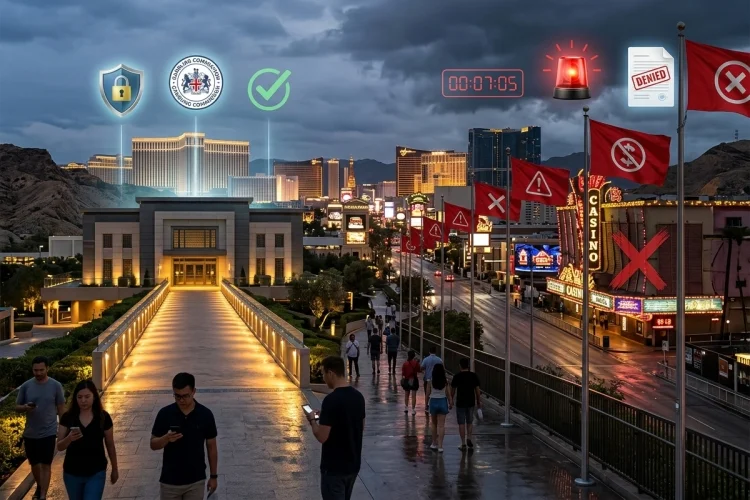
Fraudulent casino websites do not always look suspicious. Some copy the design, games, logos, and company information of established operators to appear convincing.
That is why checking whether an Online Casino Is Legitimate requires more than reading a few positive reviews.
You need to compare its claims with independent records and examine how the operator handles payments, identity checks, bonuses, complaints, and safer gambling.
Reliable casinos are usually transparent about who owns them and which authority regulates them. Questionable platforms often depend on urgency, oversized promotions, and unclear rules to convince visitors to deposit before investigating.
Sign 1: The Licence Can Be Independently Verified
A trustworthy casino displays the name of its regulator, licensed company, and licence or account number. More importantly, the information matches a record on the regulator’s official website.
Use the public register rather than a link supplied by an advertisement or review page. The UK Gambling Commission lets users search by business, trading name, and domain, while the Malta Gaming Authority register includes operator and authorisation information.
Red Flag: A Logo Without a Record
A regulatory logo is easy to copy. Be cautious when the seal is only an image, leads to an unrelated page, or produces a record for a different company or website.
Sign 2: Ownership Details Are Easy to Find
Legitimate operators identify the legal business responsible for the casino. Their terms, privacy policy, and licensing section should use the same company name.
The site should also provide usable contact information and explain which laws govern the account agreement. Inconsistent company names or missing addresses deserve further investigation.
Red Flag: Anonymous Management
Avoid platforms that provide only a generic contact form, social-media account, or messaging-app username. Anonymous ownership makes it difficult to determine who controls deposited funds or personal documents.
Sign 3: Bonus Rules Are Clear
A reliable promotion explains its wagering requirement, eligible games, maximum qualifying bet, expiration period, and withdrawal restrictions before the player accepts it.
For example, a “100% bonus up to $200” may require the deposit and bonus to be wagered several times. The headline amount alone does not show the real conditions.
Red Flag: Guaranteed or Risk-Free Claims
No casino bonus removes the mathematical risk of gambling. Claims of guaranteed profit, secret winning software, or completely risk-free play should not be trusted.
Terms allowing a promotion to be changed after a player joins are also concerning. UK consumer guidance says promotional conditions should not be altered after the customer has opted into the offer.
Sign 4: Identity Checks Follow a Clear Process
Licensed operators commonly verify a customer’s age and identity. This may involve checking a passport, driving licence, address document, or another accepted record.
The casino should explain what information is needed, how it will be protected, and when verification occurs. A request for documents is not automatically suspicious when it comes from a regulated operator through a secure account area.
Red Flag: Verification Appears Only After a Win
Under UK rules, operators should not delay information requests until withdrawal when they could reasonably have completed the check earlier. Customers must be verified before they are allowed to gamble in that market.
Be especially careful if support asks you to send sensitive documents through unofficial messaging accounts.
Sign 5: Withdrawal Policies Are Specific
A reliable cashier page states minimum withdrawals, processing estimates, possible fees, and available payment methods. It also explains whether withdrawals must return to the original funding source.
Delays may occasionally occur because of fraud prevention or anti-money-laundering obligations. However, the operator should communicate what is required and provide a realistic explanation.
Red Flag: Endless New Conditions
Repeated requests for new deposits, invented taxes, or “account unlocking fees” are serious warning signs. A casino should never require another wager simply to release an ordinary cash balance.
Sign 6: Games Have Recognisable Suppliers
Legitimate casinos usually identify their software providers and display game information such as rules, RTP, and bonus mechanics.
Independent laboratories test game engines, random number generators, and platform integrations for regulated markets. eCOGRA, for example, provides testing and certification services covering game mathematics, security, and randomness.
Red Flag: Pirated or Unverifiable Games
Poor-quality copies, unusual loading screens, missing information panels, and altered provider logos may indicate unauthorised software.
Sign 7: Player-Protection Tools Are Available
A responsible operator provides options such as deposit limits, timeouts, session information, and self-exclusion. These tools should be accessible without requiring a lengthy argument with customer service.
GamCare recommends measures such as setting limits, taking breaks, and using self-exclusion when gambling becomes difficult to control.
Red Flag: Pressure to Keep Playing
Avoid casinos that repeatedly discourage withdrawals, push immediate redeposits, or offer personal bonuses after you request account closure.
The clearest signs that an Online Casino Is Legitimate are a verifiable licence, transparent ownership, readable terms, established game suppliers, reasonable verification, and accessible player-protection tools.
Red flags include copied regulatory seals, anonymous operators, guaranteed-profit claims, surprise withdrawal charges, and pressure to continue gambling.
One suspicious detail may have an explanation, but several together should never be ignored. Before depositing, confirm the domain through an official regulator and read the complete payment and bonus rules.
Leave immediately when information cannot be verified. Protecting your money starts before the first wager, not after a withdrawal problem occurs.